
The Government of Canada has announced a 60-day review of the Electric Vehicle Availability Standard (“EV Mandate”). Options include...

The Canadian Federal Government has announced an agreement with China that will allow an initial 49,000 Chinese EVs to be imported into Canada per year.
During consultations on the Canadian EV Availability Standard, EVCO submitted a letter to the Prime Minister urging the opening of our market to Chinese EVs, and also the import of European-spec EVs without Transport Canada homologation. We are happy to see that at least one of our recommendations has come to fruition.
The text of the Government’s announcement includes:
Canada intends to provide an initial country-specific quota of 49,000 electric vehicles (EVs) per year at a most-favoured-nation tariff rate of 6.1%. We expect that this will catalyse considerable new Chinese joint-venture investment in Canada with trusted partners to protect and create new auto manufacturing jobs for Canadian workers, and ensure a robust build-out of Canada’s EV supply chain. The proportion of the country-specific quota reserved for affordable EVs with an import price of $35,000 CAD or less will reach 50% by 2030, kickstarting the availability of more affordable electric vehicles in Canada.
This will provide certainty to Canada’s domestic auto-manufacturing industry by establishing managed market entry of affordable Chinese electric vehicles, within a predictable import frame. Canada will also work with Chinese auto manufacturers on timely vehicle certification to ensure they meet Canadian motor vehicle safety standards.
This amount is a return to volumes close to the year prior to recent trade frictions on these imports (2023-2024). This amount represents less than 3% of the market for new vehicles sold in Canada.
This is a huge win for consumer choice. Canada’s current EV market offers very few options below $40,000 CDN. If we want to continue increasing EV market share, we desperately need high-quality, affordable electric vehicles. In addition to these becoming available from Chinese manufacturers, this should also force existing manufacturers in North America to compete on both price and features.
Like clockwork, opponents to this announcement have trotted out every tired excuse why Chinese EVs cannot be allowed in our market:
The announcement of the 49,000 Chinese EV annual quota amounts to less than 3% of the new vehicles purchased in Canada each year. If this is enough supply to “destroy” our auto manufacturing, then this is an admission that our manufacturers are unable or unwilling to compete. Currently, only one full electric vehicle is manufactured in Canada – the Dodge Charger Daytona sports car, which retails for $55,000. The only other was the GMC Brightdrop delivery van, which has recently been discontinued.
Asian manufacturers have expressed interest in leveraging Ontario’s unique know-how and materials for their own manufacturing. This will result in more jobs in the future, all while North American manufacturers continue to cancel projects and lay off Ontarians. In addition, the United States’ current trade policies practically demand the closure of these Canadian factories.
Internet-connectedness and camera systems are not new or unique to EVs. The vast majority of gas vehicles also have these capabilities. In addition, we already have Chinese-built vehicles on Canadian roads. This includes EVs like some Teslas, Polestars, and Volvos. You may also be surprised to learn that the Buick Envision and Lincoln Nautilus gas vehicles are made in China. Many other Buick models are started in China, and finished in South Korea. Why do these not carry the same concerns?
Norway is currently the EV market leader in the world, with 95.9% of vehicles now electric in 2025. Chinese EV manufacturers such as BYD, Nio, and Xpeng have been selling there for over 5 years. If these can function in Norway’s climate, they will function in Canada.
EVCO has been asked for several media interviews based on the welcome news:
The Government of Canada has announced a 60-day review of the Electric Vehicle Availability Standard (“EV Mandate”). Options include...
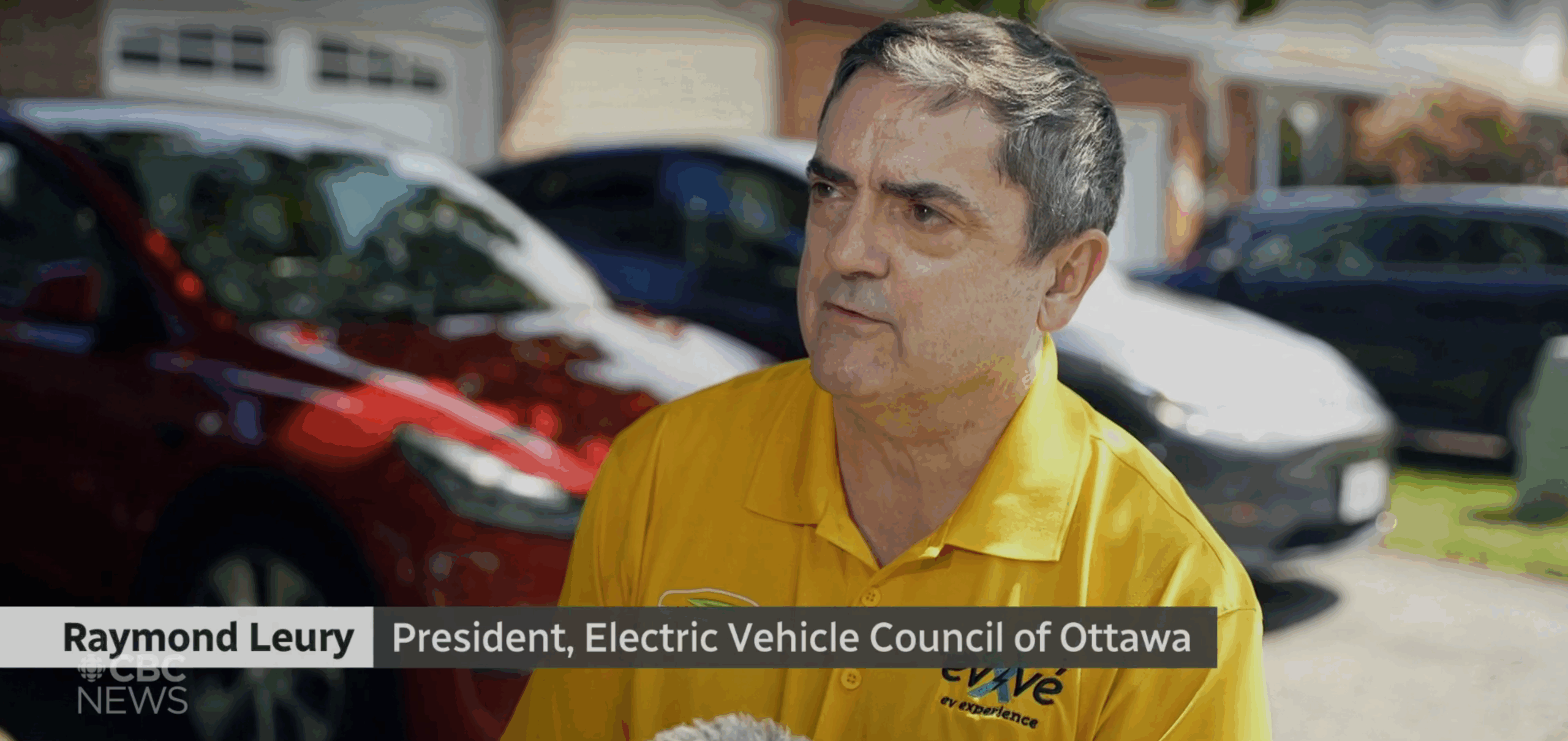
EVCO President Raymond Leury was interviewed by the CBC on September 5, 2025 in response to the Canadian Federal...

Raymond was interviewed for the August 3, 2025 Ottawa Citizen article “Deachman: If we’re serious about EVs, we need...