
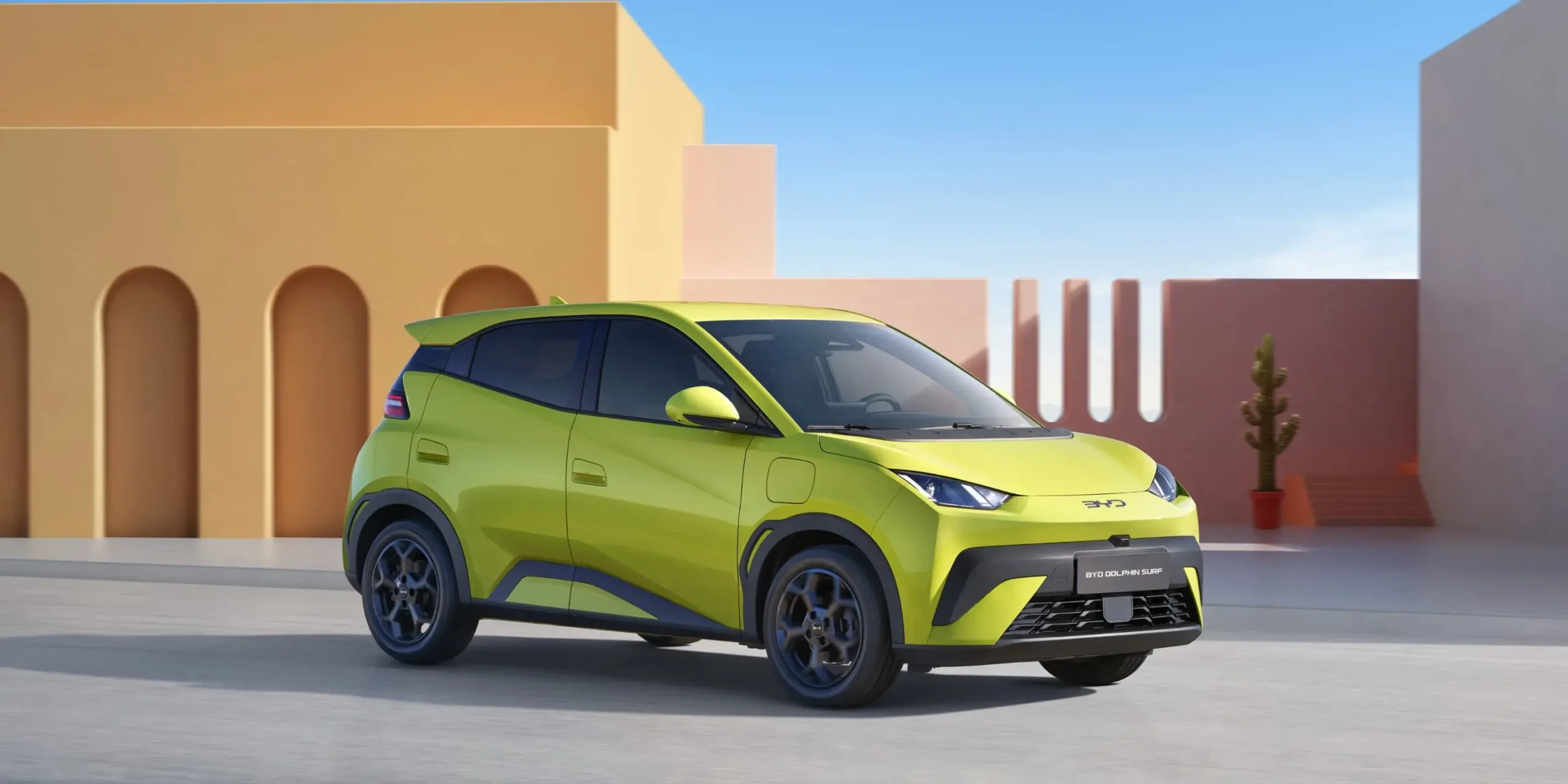
Admittedly, the title is a bit clickbait-y. The Government of Canada has announced that Chinese EVs will be allowed...


EVCO has written and submitted a letter to Canadian Prime Minister Carney, and other Ministers, encouraging them to keep the current EV sales mandate and to bring back the Federal $5,000 rebate on EVs. You can read our letter below:
Dear Prime Minister Carney, Ministers Freeland, Dabrusin, Hodgson and Joly,
I’m writing on behalf of the Electric Vehicle Council of Ottawa, a volunteer-led non-profit founded in 1983. In summary, here are our recommendations to strengthen the Canadian EV market – the rest of this e-mail provides justification:
Background:
This week the big three automakers have met with you to advocate for the removal of the EV mandate. This is not new or surprising as they have been advocating for removal or relaxation of the mandate since it was proposed several years ago. The mandate only comes into effect in 2026. This is many years after jurisdictions such as Québec, BC, Norway, the UK and many others have put their mandates in place. Canada’s cautious moves on this front have been a disappointment. A repeal of the mandate would be a significant step backwards as the rest of the world races ahead of Canada in the electric transportation transition.
The recent slowdown in EV sales is entirely due to incentive uncertainty and temporary withdrawal of the Federal and Québec incentives. Given that the Federal government has announced the return of the subsidy, the EV market will continue to be depressed until the subsidy is back in place. Consumers are delaying the purchase of EVs while they wait for the subsidy and this is causing significant pain for everyone in the industry, particularly for those dealerships that have embraced electrification and now find themselves holding inventory. We urge the Federal government to put the subsidy back in place ASAP to unlock pent up demand.
The automakers claim that it’s impossible for them to meet the mandate and that it should be eliminated. The mandate gives them a full 10 more years to make the transition. Let’s look at each manufacturer’s progress towards electrification.
Stellantis in North America currently sells only three full electric models: The Charger Daytona which is an expensive low volume niche market car, the Fiat 500e which is designed and built in Europe and the Jeep Wagoneer BEV. They have been selling the Pacifica PHEV since 2017 and have yet to build a fully electric version. They continue to delay the introduction of an EV pickup truck even as their competition has been selling them for years.
Ford has three full electric models in Canada: the F150 Lightning, the Mustang Mach-e and the e-transit (which is a commercial van). They only have two consumer EV models in market both of which were introduced many years ago. Ford has three additional electric models in Europe that they could bring to Canada: the Puma, Capri and Explorer, yet they are not available here.
GM is doing better. They have a dozen models in market and those are selling well, the Equinox EV in particular. Most of those models have been recently introduced after years of delays. The Bolt was the only EV they offered for many years. They have many electric models available in China which have yet to be introduced here. They had claimed that Buick would be entirely electric by 2030, yet Buick doesn’t have a single EV in market in Canada. Not that Buick hasn’t introduced new models – all of those are gas powered, none are hybrid or PHEV (plug-in hybrid).
The auto industry is facing an existential crisis, the same that Kodak faced when it failed the transition to digital photography, and will need some further encouragement to fully undertake a transition the scale of which they have never experienced.
Meanwhile other manufacturers like Kia and Hyundai are doing much better. Stellantis in Europe offers a wide range of reasonably priced EVs. GM is selling large quantities of EVs in China through their partnership with SAIC. Not offering electric vehicles here will only cause the big three to continue lagging the rest of the world and further erode their long-term prospects as well as risk Canadian auto sector jobs.
Removing the incentive would reward automakers who have clearly dragged their feet and resisted the transition to electric transportation and penalize those that have taken up the challenge.
We continue to have an EV supply problem in Canada. For example, the Myers group has 5 GM dealerships in the Ottawa area. GM has two EV pickup trucks in market: the Chevy Silverado EV and the GMC Siera EV. When we enquired about borrowing one for a recent event we were told that they had only one in stock – that’s 5 dealerships and only one in stock. Bringing European and Chinese EVs (by reducing tariffs on Chinese EVs) to Canada would help alleviate the serious supply shortage.
I would be happy to discuss this matter with you at your convenience.
Thanks,
Raymond J Leury MBA
President, Electric Vehicle Council of Ottawa
Admittedly, the title is a bit clickbait-y. The Government of Canada has announced that Chinese EVs will be allowed...
The Canadian Federal Government has announced an agreement with China that will allow an initial 49,000 Chinese EVs to...
The Government of Canada has announced a 60-day review of the Electric Vehicle Availability Standard (“EV Mandate”). Options include...